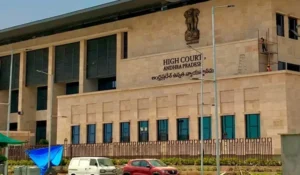
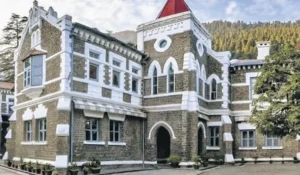
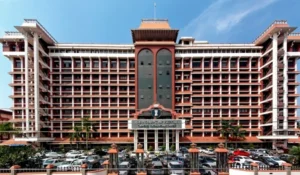
India has a well-established judicial system with the Supreme Court of India at the top, followed by High Courts and District and Subordinate Courts. High Courts play an important role in hearing appeals, constitutional matters, civil cases, criminal cases, and other legal matters.
As of 2026, India has 25 High Courts. Some High Courts have jurisdiction over a single state, while others serve more than one state or Union Territory. The Department of Justice has also referred to the existence of 25 High Courts in its official information.
Quick Information
| Particular | Details |
| Total High Courts in India | 25 |
| Highest Court in India | Supreme Court of India |
| High Courts Established | Under the Constitution and relevant laws |
| Jurisdiction | State(s) and Union Territories |
| Total States in India | 28 |
| Total Union Territories | 8 |
| High Courts | 25 |
| Common Functions | Appeals, writ petitions, civil and criminal matters |
| Highest Judicial Authority | Supreme Court of India |
List of 25 High Courts in India
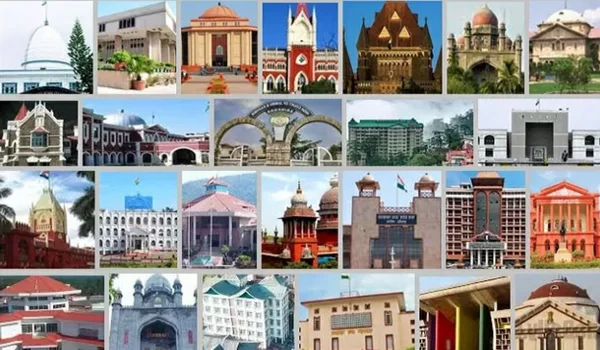
Here is the complete list of High Courts functioning in India:
| No. | High Court | Principal Seat | Jurisdiction |
| 1 | Allahabad High Court | Prayagraj, Uttar Pradesh | Uttar Pradesh |
| 2 | Andhra Pradesh High Court | Amaravati | Andhra Pradesh |
| 3 | Bombay High Court | Mumbai, Maharashtra | Maharashtra, Goa, Dadra and Nagar Haveli and Daman and Diu |
| 4 | Calcutta High Court | Kolkata, West Bengal | West Bengal |
| 5 | Chhattisgarh High Court | Bilaspur | Chhattisgarh |
| 6 | Delhi High Court | New Delhi | Delhi |
| 7 | Gauhati High Court | Guwahati, Assam | Assam, Nagaland, Mizoram and Arunachal Pradesh |
| 8 | Gujarat High Court | Ahmedabad | Gujarat |
| 9 | Himachal Pradesh High Court | Shimla | Himachal Pradesh |
| 10 | High Court of Jammu & Kashmir and Ladakh | Srinagar/Jammu | Jammu & Kashmir and Ladakh |
| 11 | Jharkhand High Court | Ranchi | Jharkhand |
| 12 | Karnataka High Court | Bengaluru | Karnataka |
| 13 | Kerala High Court | Ernakulam, Kochi | Kerala and Lakshadweep |
| 14 | Madhya Pradesh High Court | Jabalpur | Madhya Pradesh |
| 15 | Madras High Court | Chennai | Tamil Nadu and Puducherry |
| 16 | Manipur High Court | Imphal | Manipur |
| 17 | Meghalaya High Court | Shillong | Meghalaya |
| 18 | Orissa High Court | Cuttack | Odisha |
| 19 | Patna High Court | Patna | Bihar |
| 20 | Punjab and Haryana High Court | Chandigarh | Punjab, Haryana and Chandigarh |
| 21 | Rajasthan High Court | Jodhpur | Rajasthan |
| 22 | Sikkim High Court | Gangtok | Sikkim |
| 23 | Telangana High Court | Hyderabad | Telangana |
| 24 | Tripura High Court | Agartala | Tripura |
| 25 | Uttarakhand High Court | Nainital | Uttarakhand |
What Is a High Court?
A High Court is the highest court at the state or regional level in India’s judicial system. High Courts have powers to hear appeals from lower courts and can also deal directly with certain legal and constitutional matters.
High Courts can issue writs for the protection of fundamental rights and other legal rights. They also supervise courts and judicial authorities working under their jurisdiction.
How Many High Courts Are There in India?
There are 25 High Courts in India as of 2026.
However, the number of High Courts does not correspond directly to the number of states because one High Court can have jurisdiction over more than one state or Union Territory.
For example:
- The Punjab and Haryana High Court serves Punjab, Haryana and Chandigarh.
- The Gauhati High Court has jurisdiction covering Assam and certain northeastern states.
- The Bombay High Court covers Maharashtra, Goa and certain Union Territories.
- The Kerala High Court also has jurisdiction over Lakshadweep.
- The Madras High Court has jurisdiction over Tamil Nadu and Puducherry.
This arrangement allows a single High Court to serve multiple jurisdictions where applicable.
High Courts Serving More Than One State or Union Territory
Several High Courts have jurisdiction beyond one state.
- Bombay High Court
The Bombay High Court is based in Mumbai and serves Maharashtra and Goa. It also has jurisdiction over the Union Territories of Dadra and Nagar Haveli and Daman and Diu.
- Gauhati High Court
The Gauhati High Court is located in Guwahati and has jurisdiction over Assam, Nagaland, Mizoram and Arunachal Pradesh.
- Kerala High Court
The Kerala High Court is located in Kochi and serves Kerala and the Union Territory of Lakshadweep.
- Madras High Court
The Madras High Court is located in Chennai and has jurisdiction over Tamil Nadu and Puducherry.
- Punjab and Haryana High Court
The Punjab and Haryana High Court is located in Chandigarh. It serves the states of Punjab and Haryana as well as the Union Territory of Chandigarh.
- Jammu & Kashmir and Ladakh High Court
The High Court of Jammu & Kashmir and Ladakh serves both the Union Territories of Jammu & Kashmir and Ladakh.
Which Is the Oldest High Court in India?
The Calcutta High Court is generally recognized as the oldest High Court in India. It was established in 1862 under the High Court at Calcutta Act, 1861.
The Bombay High Court and Madras High Court were also established in 1862.
These courts were created during the British period and later became part of India’s modern judicial system.
Which Is the Largest High Court in India?
The Allahabad High Court is one of India’s largest High Courts in terms of its sanctioned judicial strength and the large population covered by its jurisdiction.
It serves the state of Uttar Pradesh and has its principal seat at Prayagraj, with a permanent bench at Lucknow.
What Are the Main Functions of High Courts?
High Courts perform several important judicial functions. Their major responsibilities include:
- Hearing appeals against decisions of lower courts.
- Hearing civil and criminal cases within their jurisdiction.
- Examining constitutional and legal issues.
- Issuing writs in appropriate cases.
- Protecting fundamental and legal rights.
- Supervising subordinate courts.
- Interpreting laws and legal provisions.
- Hearing certain election-related and administrative matters.
The exact jurisdiction and powers can vary according to the Constitution, laws and the jurisdiction assigned to each High Court.
High Court and Supreme Court: Difference
The Supreme Court and High Courts are both constitutional courts, but they operate at different levels.
| Feature | Supreme Court | High Court |
| Position | Highest court in India | Highest court at state/territorial level |
| Number | 1 | 25 |
| Jurisdiction | Entire India | Assigned state(s)/UT(s) |
| Appeals | Hears appeals from High Courts and other specified matters | Hears appeals from subordinate courts |
| Constitutional Role | Final interpreter of the Constitution | Important constitutional and writ jurisdiction |
| Location | New Delhi | Different cities across India |
Do All States Have Their Own High Court?
No. Every state does not have a separate High Court.
India has 28 states, but only 25 High Courts. This is because some High Courts have jurisdiction over more than one state or Union Territory.
Therefore, it is incorrect to assume that every state must have its own separate High Court.
High Court Benches
A High Court may have benches in locations other than its principal seat. These benches help people access the High Court without always having to travel to the principal seat.
For example, the Allahabad High Court has its principal seat at Prayagraj and a permanent bench at Lucknow.
The availability of benches depends on the applicable legal and administrative arrangements.
How Does the High Court System Work?
India follows a hierarchical judicial structure.
Supreme Court of India
↓
High Courts
↓
District and Sessions Courts
↓
Other Subordinate Courts
A case may move through different levels of the judicial system depending on the type of case and the applicable law. A person may also approach a High Court directly in matters where the High Court has appropriate original or writ jurisdiction.
Frequently Asked Questions
How many High Courts are there in India in 2026?
There are 25 High Courts in India in 2026.
Which is the oldest High Court in India?
The Calcutta High Court, established in 1862, is the oldest High Court in India.
Which is the largest High Court in India?
The Allahabad High Court is among the largest High Courts in India, particularly considering its jurisdiction and judicial strength.
Which High Court serves two or more states?
Several High Courts serve multiple states or Union Territories. Examples include the Gauhati High Court, Bombay High Court, Madras High Court and Punjab and Haryana High Court.
Does every Indian state have a separate High Court?
No. India has 28 states but 25 High Courts because some High Courts serve more than one state or Union Territory.
What is the highest court in India?
The Supreme Court of India is the highest court in the country. High Courts function below the Supreme Court in the judicial hierarchy.
Final Thoughts
India currently has 25 High Courts, which form an important part of the country’s judicial system. They deal with appeals, writ petitions, civil and criminal matters, constitutional questions and supervision of subordinate courts.
The 25 High Courts collectively provide higher-level judicial services across India’s states and Union Territories. Because some High Courts have jurisdiction over multiple states or Union Territories, the number of High Courts is lower than the total number of states and Union Territories.
For official government information, the Department of Justice and the National Portal of India provide information relating to India’s judicial system and High Courts.